
The northern edge of Lancaster County
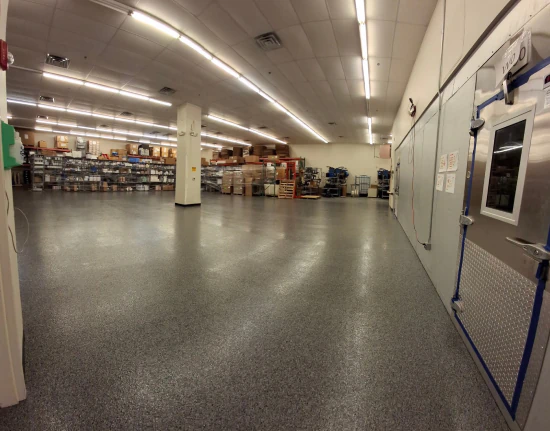
Ephrata, Denver and Adamstown sit at the top of the county and inside our range. Farm country, small boroughs and a lot of hard working concrete.
Where we work
Lancaster County at a glance
Northern Lancaster County is reachable from Boyertown down through the Oley Valley and across, and the towns at the top of the county, Ephrata, Denver and Adamstown, are inside our normal working radius. This is the furthest west we go and we are straight about that, but it is a part of the world with a lot of concrete that deserves better than it gets.
The character here is different to anywhere else on our patch. It is farm country, with a large Plain community, and the buildings reflect that. Farm shops, equipment buildings, milking parlours, workshops and outbuildings, most of them with concrete floors that work considerably harder than any residential garage ever will.
We show up, finish on time, and get it right. No hidden fees, no surprises.
Jimmy and Justyn, Cobra EpoxyWhat we get called for
What Lancaster County asks us for most
Every service runs across the whole county. These are simply the three that come up most often here.
Garage Epoxy Flooring
Ground back to clean concrete, repaired, then built in flake under polyaspartic.
Basement Epoxy Flooring
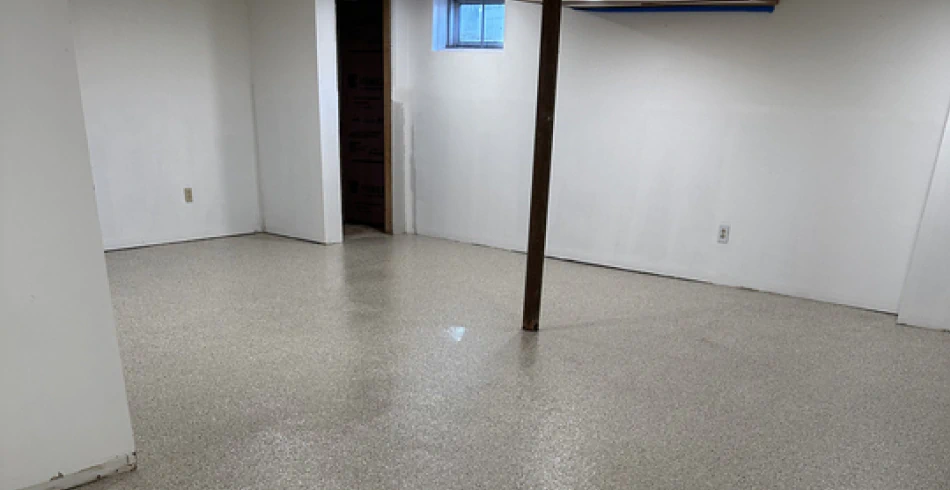
Moisture tested first, then finished in a light blend that lifts the whole room.
Flake Epoxy Flooring
Thirty one blends, broadcast by hand into the wet base until the surface is full.
What we find under the paint
Those agricultural floors are a genuinely different job. They take machinery, hoof traffic, washing down, silage acids and fertiliser, and the specification has to account for all of it rather than being scaled up from a house. Chemical resistance and drainage matter far more than color does.
The boroughs themselves are the familiar pattern, older housing with proper basements and small garages, plus a steady run of small commercial and light industrial units along the Route 222 and Route 272 corridors. The Adamstown antiques trade in particular has put a lot of old buildings back into use, and old buildings mean old floors.
Farm chemistry as well as winter
Northern Lancaster gets the same freeze and thaw punishment as everywhere else we work, roughly forty cycles a winter of water getting into concrete, freezing and pushing the surface apart. On exterior slabs that is the main mechanism and sealing the surface stops it.
What is different here is what lands on the concrete the rest of the year. Agricultural buildings see fuel, hydraulic oil, fertiliser, silage effluent and washing down, and several of those attack the cement paste directly rather than waiting for a frost. A farm shop floor can degrade chemically far faster than a residential garage ever degrades physically.
That changes the specification rather than the method. Chemical resistance gets chosen for what the building actually handles, drainage falls are respected rather than filled in, and coving goes in where anything gets hosed. It is the same build with different decisions inside it.
The four stages, every job
Stage one is the grind. Diamond grinders with dust extraction take the slab down to clean, open concrete so the coating has a mechanical profile to key into. This is the stage that decides whether a floor lasts, and it is the one kits and cheap quotes skip.
Stage two is repair. Every crack, divot, pit and spalled patch gets cut out where it needs it, filled and leveled. Control joints get treated properly rather than coated straight across. A coating laid over a crack simply prints its shape and the crack opens again anyway.
Stage three is the base coat and the broadcast. American made base goes down and bonds into the profile, and flake goes into it by hand until the wet surface will not take another handful. Full broadcast, not a scatter.
Stage four is the scrape back and the topcoat. The loose chip comes off, the floor is vacuumed, and a polyaspartic topcoat seals the system in. That topcoat is the layer that takes the wear, resists the chemicals and gives you the finish you actually look at.
On the map
Getting to you from Boyertown
Lancaster County is inside our normal working radius, which runs roughly fifty miles out from Boyertown. The county seat is Lancaster.
If your town is not on the list above, that does not mean we do not cover it. Call and ask. We would rather tell you honestly than send somebody on a two hour round trip, and we would rather hear from you than have you assume.
Questions
Working in Lancaster County
The questions that come up most on calls from this part of the patch.
Do you come out this far?
We run roughly fifty miles out from Boyertown, which covers Berks County and good parts of Montgomery, Chester and Lehigh. If you are not sure whether you are in range, call and ask. We would rather tell you honestly than send somebody on a two hour round trip.
Will it handle the chemicals we use?
Tell us what they are and we will specify for them. A kennel, a commercial kitchen and a workshop all put different things on the floor, and chemical resistance is a specification decision rather than a property every coating shares. It is one of the questions we ask at the walkthrough.
Can you work outside our opening hours?
Yes, and for most commercial jobs that is exactly how it runs. Evenings, overnights and weekends, in sections, with a clear route through the building the whole time. It takes more planning than doing it in one go, which is why the scope goes in writing before anything starts.
What does a moisture test involve?
Either a calcium chloride kit, which sits under a sealed dome on the slab for about three days and measures how much water comes through, or a probe drilled into the concrete that reads the humidity inside it. Both give a number rather than an impression, and the number decides the specification.
How soon could you get here?
Jimmy gets back to you within a business day and the walkthrough is usually inside the week. Lead time to the actual install depends on the season, and exterior work in particular books up ahead of the summer, so spring and pool deck slots go early.
Is there a deposit?
A deposit is taken to book the date and hold the material, and the balance is due on completion once you have walked the floor. The amounts are on the paperwork before you agree to anything. What we will not do is ask for the bulk of the money up front, which is the thing to be wary of generally in this trade.
Can you work around a house move?
Yes, and an empty house is the easiest job we ever get. If you are buying, the window between completion and moving in is the perfect time to do a garage or a basement, because the slab is genuinely clear and nothing has to be shifted. Worth booking as soon as you have a date.
Are the materials any different from a big box kit?
Completely. A consumer kit is a thin, high water content coating designed to be rolled onto concrete somebody etched with acid. What we lay is a professional grade American made system at several times the build, bonded into a mechanically ground slab. The material is a small part of the price difference. The preparation is most of it.
Book a walkthrough
Book a walkthrough in Lancaster County
Tell us the town, the space and roughly what condition the concrete is in. Jimmy comes back within a business day and arranges to walk it with you.
Made in the USA materials, OSHA certified equipment and dust extraction throughout. Residential interiors carry a true lifetime warranty. PA HIC 177204.
Rather talk it through? Call (484) 942-3219 or email jfaust@cobraepoxy.com. You can also send the details through the contact page.
Tell us about the floor
One business day for a callback. Jimmy comes out, looks at the concrete properly and gives you a real number.
Also covered: Berks County, Montgomery County, Chester County, Lehigh County, Bucks County. Browse the full list of services, see finished work in the gallery, or get in touch.