
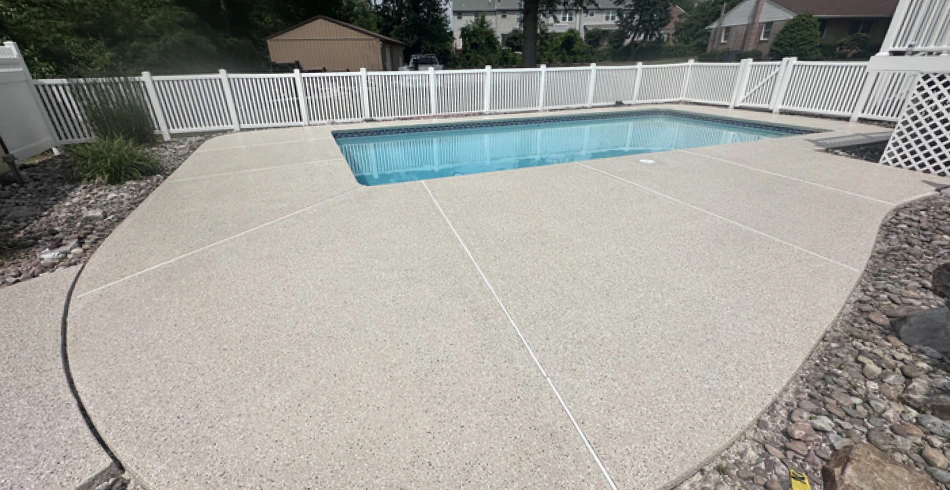
Every crack fixed before the first coat goes down
Coat over a crack and its outline shows right through the finish, then it opens up again anyway. On old city concrete the repair work decides whether a floor lasts, which is why it always comes ahead of everything else.
Where a coating failure really begins
Almost every coating failure in this trade traces back to preparation. Floors get acid etched or pressure washed because it is quicker, and the coating ends up held on by surface tension with no real grip on the concrete at all. It looks fine on the day it is handed over. It rarely looks fine after a winter.
We grind. Diamond grinders with dust extraction bring every slab down to clean, open concrete, and only then does anyone look closely at the damage. Cracks, divots, pitting and spalled patches all get repaired at that stage, while the surface is bare and every flaw is out in the open where it can be dealt with.
Skipping that step saves nothing. A crack under a fresh coating keeps its shape, prints through the finish and sooner or later opens again, taking the coating along that line with it. That is why repairs sit ahead of the base coat on every job we do, and it is a large part of why residential interior floors can carry a true lifetime warranty. We are not going to cut corners at the stage that decides whether you have to call us back in three years.
The part of the job customers keep writing about
Prep disappears once a floor is finished, which is exactly why so many installers rush it. It is also the stage customers in this part of Pennsylvania mention most. One review put it in a single line: “I was most impressed with their prep work; every crack or divot repaired.”
Another customer had minor flaws turn up that were almost certainly caused by other construction trades on the house. Cobra responded immediately and set to work making it right, knowing full well the damage was not theirs to fix. That is the standard: show up, finish on time and get it right.
Front steps and landings show all of this more than any floor indoors. The edges take knocks, water sits on the treads, and any crack left under a coating on a step is in plain view of everyone who walks up to the door. Those get the same repair work as a basement slab.
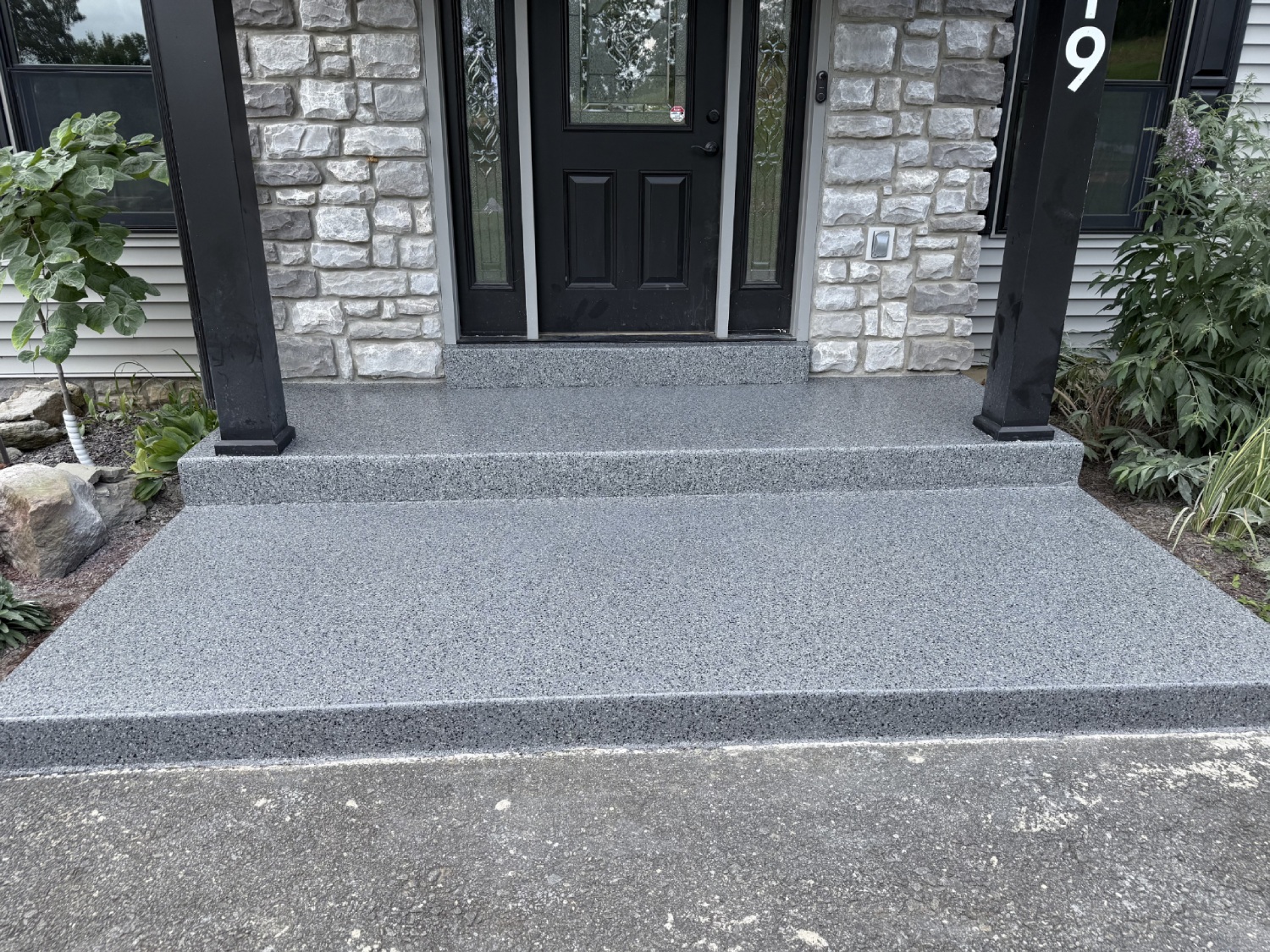
Cobra Epoxy and Flake Coatings, PA HIC 177204Coat over a crack and you have a coated crack.
Sorting the damage out at the walkthrough
Every line in a slab looks alike from a standing height. They are not alike, and each kind gets handled its own way, so we go through them with you on the first visit before anything is priced.
Surface cracks
The common kind in older concrete. They get opened up and filled so the repair sits flush with the slab before a coating ever goes near them.
Pitting and divots
Small holes and chips spread across the surface, usually worst where water or salt has sat for years. Each one is filled so it cannot ghost up through the flake.
Spalling
The surface flaking away and breaking up, very often just inside a garage door where the salt is heaviest. It looks bad and it is ordinary repair work.
Control joints
Straight saw cut lines put there on purpose to give the slab a place to crack. We treat them as joints and keep them as clean lines in the finished floor.
The one problem we will not coat over
Surface damage, pitting, spalling and cracking are all normal repair work, and none of it makes a slab too far gone. The line we draw is structural movement. A slab that has heaved or dropped at a corner has moved for a reason, and there is no guarantee that reason has gone away.
A coating sits on top of that problem and does nothing to solve it. It cannot hold two pieces of concrete in place, and it will split along the same line the slab does. When we find movement at a walkthrough, we tell you plainly that it needs sorting out before any floor goes on, and we leave the coating conversation until it has been.
Old concrete comes with this territory. The slabs under Reading’s pre war rowhomes and in the small garages behind them are the oldest concrete we work on, and the question comes up here more often than it does out in the townships. Most of the time the answer is still yes. Now and then it is not yet, and you will hear that from Jimmy in person.
Send us a photo of the crack and Jimmy will call you back within a business day.Cracks get repaired. A moving slab gets a straight answer.
Crack repair across the city and out into Berks
Reading is roughly 18 miles up the road from our shop in Boyertown, well inside the fifty or so miles we travel for work. Cracked slabs below the Pagoda on Mount Penn are routine for us, and so are the ones in Wyomissing, Birdsboro and Blandon.
Right on the edge of our range? Ask. One call settles it.
Questions
Cracked concrete questions from Reading
What people want to know before we come out and look at the slab.
How can I tell if a crack means the slab is moving?
Look at the two sides of it. If one edge sits higher or lower than the other, or a corner of the slab has lifted or sunk, that is movement, and a coating will not cure it. A flat crack with both edges level is ordinary repair work. We check this at the walkthrough.
Couldn’t you just coat over the cracks?
We could, and it would look fine for a while. Then the crack would print its shape up through the finish and open again, and the coating along that line would go with it. Repairing first is the only way a floor laid over cracked concrete keeps looking like a floor.
Are the straight lines cut into my slab cracks?
No, those are control joints. They were saw cut on purpose to give the concrete somewhere to crack in a straight line. We keep them as clean lines through the finished floor. The wandering lines that ignore them are the actual cracks, and those are what get repaired.
Why is the concrete by my garage door the worst?
Road salt. The opening sees more salt exposure than any other concrete on the property. Salt water stays liquid longer and works deeper before it freezes, and salt also attacks the cement paste holding the aggregate together, so that strip is almost always first to break up.
Will I see the repairs after the floor is coated?
On a flake floor, no. Repairs are brought flush with the slab before the base coat, and the broadcast chip covers the difference in color between old concrete and fresh filler. What you would see is a crack somebody left alone, which is exactly why we leave none.
Why grind the floor instead of acid etching it?
Etching and pressure washing leave the surface too smooth for a coating to key into, so it hangs on by surface tension. Diamond grinding opens the concrete up properly and exposes every crack and divot at the same moment, which is exactly when they need finding and repairing.
Book a walkthrough
Let Jimmy look at the cracks first
Tell us where the concrete is (basement, garage, steps or patio), roughly how big an area, and what the damage looks like. A photo helps a lot. Jimmy calls back within a business day to arrange a time and look at it in person.
American made materials, OSHA certified grinders and a Pennsylvania HIC number: 177204. Call (484) 942-3219, email jfaust@cobraepoxy.com, or reach us through the contact page.
Tell us about the concrete
A line or two is enough to start.
Where crack repair leads next in Reading
Once the repairs are in, most slabs get coated. For houses that means a basement floor or a garage floor, nearly always finished in the flake system that hides the patching. Shops and stockrooms go under commercial epoxy flooring. The main concrete crack repair page has the full process, finished floors are in the gallery, and the rest of our local coverage sits on the Reading and Berks County pages.