
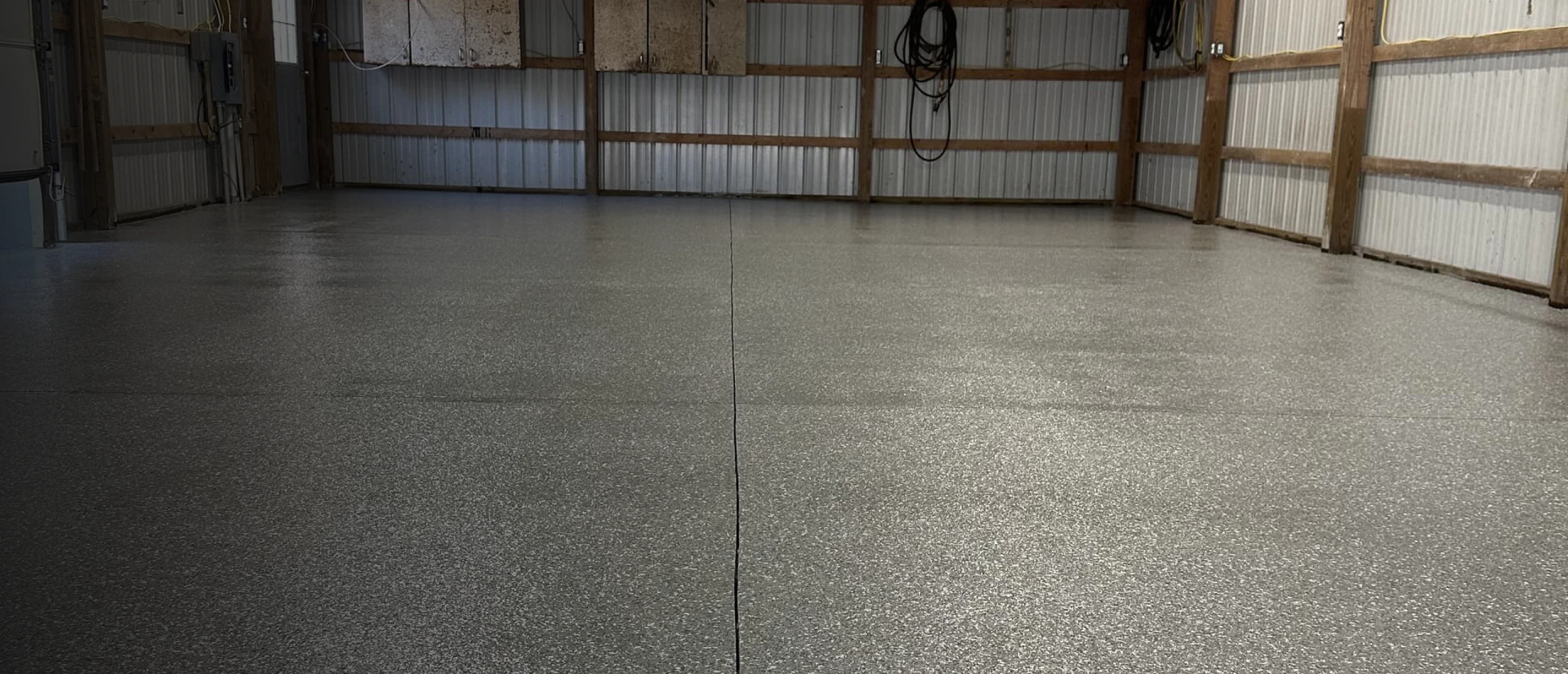
A flake floor that makes peace with old city concrete
Most concrete inside Reading went down long before anyone planned to coat it, and very little of it is flat. A broadcast flake floor gets along with that. Jimmy brings the blend swatches to the walkthrough, and whoever quotes your floor is the same person holding the grinder on the day.
Why flake suits an uneven slab
Walk the city and most of what you see is pre war brick, rowhomes and twins packed shoulder to shoulder. The basements under them were dug and poured a very long time ago, and they are usually thin. The garages out back, when a house has one, tend to be detached, sitting off an alley and poured at some other point in the life of the property. Lay a straightedge across either and you will see daylight under it.
A solid color coating shows every one of those dips. Low light from a small window or an open garage door skims across the surface and picks out each ridge and hollow, and a glossy single color turns them into shadows. Flake works the other way. Thousands of colored chips broadcast into the wet base coat give the eye a pattern to follow, so the unevenness underneath mostly drops out of view.
It is worth being clear about the limits. A corner that has heaved or dropped is movement, and no coating solves movement, so we point that out during the walkthrough instead of burying it under chips. Ordinary wear, pitting and old patches are a different story. Those get ground and repaired as part of the job, and the flake takes care of how the finished floor reads.
Cobra Epoxy and Flake Coatings, PA HIC 177204Old city concrete was never poured flat. A good blend stops you noticing.

Picking a blend off the swatch sheet
Nobody should have to choose a floor from a phone screen. The swatch grid comes out at the walkthrough, every blend laid side by side with its name underneath, and you can carry it to the spot where the floor is actually going.
That last part matters more than people expect. A blend that looks warm on a sheet held by the front door can read cooler at the bottom of a basement stair, and a busy mix that seemed loud in your hand often settles once it covers a whole room. Hold the sheet at floor level, in the light the room really gets, and the choice tends to make itself.
One customer wrote afterward that Jimmy “fully explained the process to us and helped us pick out and match the color.” That is the walkthrough doing its job. Ask about anything on the sheet, and if two blends are close, we will tell you which one hides dust and tire marks and which one shows every footprint.
Matching the floor on the other side of the party wall
A lot of Reading is twins and rowhomes, so the floor somebody wants to copy is often right next door, sometimes one shared wall away. We get asked for it more than you would think, and most of the time it can be done.
If we laid the neighbor’s floor, we already know the blend and there is nothing to guess. If another company did it, take a photo and send it through the contact page, or ask the neighbor whether we can see it in person, and we will get close from the swatches.
The honest caveat is light, and in a row of houses it catches people out. Your neighbor’s garage may face the same way as yours yet sit in more shade, or their basement may have a window where yours has none. Two floors from the same blend can look like two different blends for that reason alone. If we think that will happen, we say so at the walkthrough, so the floor you end up with is the one you pictured.
Which way the room faces
The same chip in a north facing garage and a south facing one does not look the same. North light runs cool and flat, while south light warms the tan and cream flakes.
Bulbs in place of daylight
Plenty of city basements get almost no daylight. Under ceiling fixtures a blend tends to read by its darkest chips, so a mix that looked balanced upstairs can come across heavier below.
What ends up sitting on it
Cabinets, a workbench, a car or a couch cover more floor than you expect. A quieter blend often suits a crowded room, and an empty garage can carry more contrast.
Grind, broadcast, scrape, topcoat
Every flake floor we lay starts with diamond grinders and dust extraction, taking the slab back to clean, open concrete. Acid etching and pressure washing leave nothing for a coating to grip, and on old city concrete that shortcut is the usual reason a floor lets go. Cracks and divots get repaired next, because a crack left under a coating prints its shape straight through the finish.
On day one the base coat goes down and the flake is broadcast into it while it is still wet, until no base coat shows. On day two we scrape back the loose and standing chips, which knocks down the high points and leaves an even texture, then roll on the topcoat that locks everything in. For a normal single or double garage bay that is two days on site, with light foot traffic the same evening and vehicles at about the three day mark.
In the city, getting to the slab is part of the work. Grinders, extraction and material come from a van parked on the street, down a narrow basement stair or along an alley a truck cannot enter. We plan for that from the first visit, and it is part of why a Reading floor and a township floor of the same size do not quote the same.
From Mount Penn to the 422 bypass
Reading is about 18 miles from our shop in Boyertown, well inside the roughly fifty mile radius we work. Flake floors go down all over the city, from houses within sight of the Pagoda on Mount Penn to Penn Street and out toward the Route 422 bypass.
Wyomissing, Birdsboro and Blandon are close by, along with the rest of Berks County.
Flake floor questions we hear in the city
The ones that come up while the swatch sheet is still on the floor.
Will a flake floor hide the dips in my old concrete?
Mostly, yes. The broadcast chips give your eye a pattern to follow, so gentle hollows and ridges stop standing out the way they would under a solid color. What flake cannot do is correct a slab that has heaved or dropped at a corner. That is movement, and we will tell you at the walkthrough.
Can I see the blends before I decide?
Yes. The swatch grid comes to the walkthrough with every blend named, and we encourage you to hold it at floor level in the room being coated. A blend can shift a lot between a bright entry and a dim basement, so choosing in the real light saves second thoughts later.
Can you match my neighbor’s floor?
If we laid it, we already know the blend, so matching it is straightforward. If another company did the work, bring a photo and we will get close from our swatches. Keep in mind that light changes things, and the same chip in a north facing room and a south facing one reads differently.
How long until I can use the floor?
A normal single or double garage bay takes two days on site. Grinding, repairs, the base coat and the flake broadcast happen on day one, with the scrape back and topcoat on day two. Light foot traffic is fine that same evening, and vehicles can go back on at about three days.
How do I keep a flake floor clean?
Sweep it or run a dust mop over it, and wash it with warm water and a neutral cleaner when it needs more. A hose works fine in a garage. Skip anything acidic, and never wax or polish it, since those either attack the topcoat or leave a film that dulls the flake.
What happens if the floor fails down the road?
Call us and we come out. Residential interior floors carry a true lifetime warranty against the system losing bond, and being a short drive from Reading is what makes that promise useful. One customer had flaws caused by other trades on his house, and we fixed those as well.
Book a walkthrough
See the swatches on your own floor
Tell us the room, roughly how big it is and what the concrete looks like today. Jimmy calls back within a business day to set up a walkthrough, and the swatch grid comes with him.
Made in the USA materials, OSHA certified equipment and dust extraction on every grind. PA HIC 177204. Military, police, fire and hospital workers get a discount, so mention it when you call. Reach Jimmy at (484) 942-3219 or send the details over.
Describe the slab
A sentence or two is plenty. Jimmy replies within a business day.
Other Reading floors
Flake is the finish on most of the basement floors and garage floors we coat in the city, and it turns up on store and shop floors as well. When the slab needs work before any coating, start with concrete crack repair. The main flake epoxy flooring page covers the system in more depth, finished floors live in the gallery, and the Reading and Berks County pages list everything else we do nearby.