
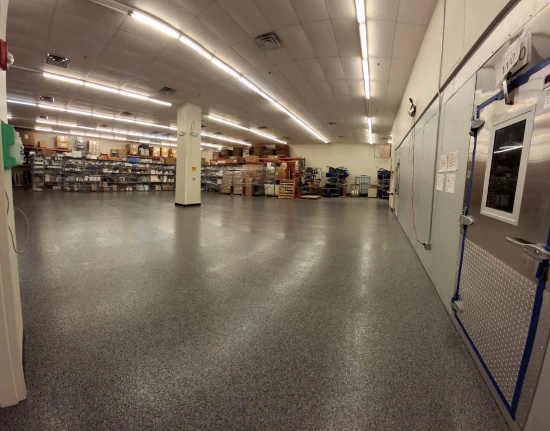
A floor for the back room that carries the whole business
Stockrooms, shops and post frame buildings along the Route 222 corridor carry pallet jacks, rack legs and the odd forklift. We coat them in sections so the business stays open, and we tell you straight when each kind of traffic can come back on.
Working floors at the size Blandon actually builds them
Say warehouse and most people picture a distribution center that runs on for a quarter mile. Around Blandon, the floors that need this kind of work tend to be smaller and busier than that. The stockroom behind a shop. A post frame building that started out as a barn and now earns its keep as a workshop. A back room with the walk in cooler along one wall.
Bare concrete in a room like that never stops shedding. A fine gray dust lifts off the surface, settles on boxed stock and shelving, and rides out to the front of the business on every pair of boots. Seal the slab and the dust stops at its source, and from then on a dust mop is enough to keep the floor looking clean.
A smaller room changes the logistics, and that is about all it changes. The floor still has to take wheels and weight every working day, plus whatever gets spilled on it, so the system gets specified for exactly that. Jimmy wants to hear what actually moves across your floor before he suggests anything, because a back room with one pallet jack and a shop with a forklift are two different conversations.
A slab inside a steel building
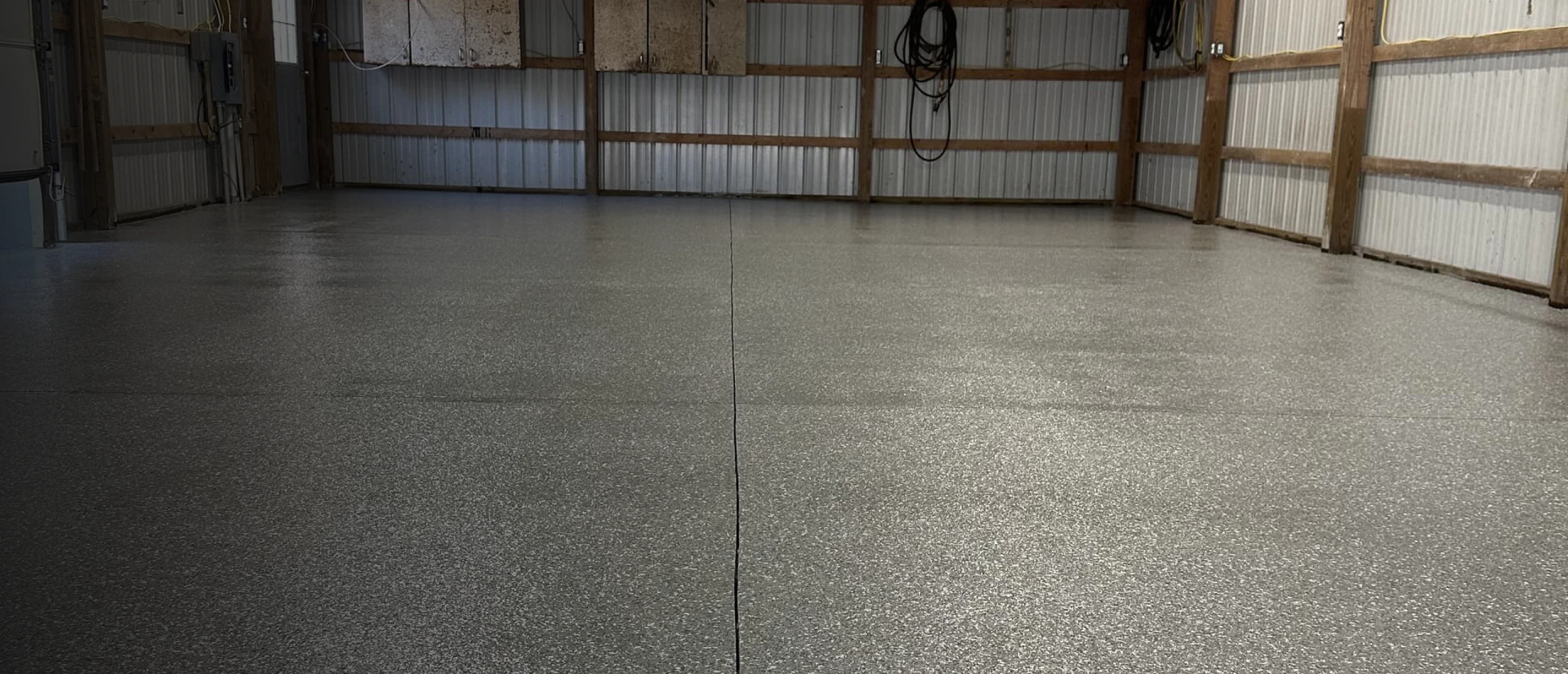
Farm outbuildings and post frame shops are a familiar sight across Berks County, and the slab inside one often gets treated like a barn floor until somebody starts running a business off it. Cabinets on the wall, hoses coiled on hooks, a truck pulled in for the afternoon: by then that concrete is doing shop work, whatever it was poured for.
Before a coating makes sense on a floor like this, Jimmy wants two answers. Was it poured level, and what gets spilled on it? Some outbuilding slabs need genuine concrete repair first, and that comes up at the walkthrough instead of halfway through the job.
Chemicals work the same way. Tell us what you use and we specify the system for them, rather than guessing and finding out later. Saw cut joints like the one running down this floor get treated properly instead of being coated straight across.
Jimmy, BoyertownRacking goes back on last, and only once the floor is hard enough to carry it.
Four parts of the floor that get built differently
A working floor is really several floors sharing one slab. These are the zones Jimmy marks out at the walkthrough, and each one gets its own build.
Pallet jack and forklift lanes
Where wheels run all day, the build goes on heavier than across the rest of the room. A tired lane can be redone by itself later without touching the floor either side.
Under the rack legs
A loaded rack pushes its whole weight through a few small feet. Damage there comes from reloading before the system has fully hardened, so we are firm about the timing.
Walkways and keep clear areas
Lines painted on afterward wear off wherever wheels cross them. Walkways, bay edges and keep clear areas get laid into the system while it goes down.
Cooler doors and entrances
The walk in cooler threshold and the door where rain comes in on boots are two spots where we look at building extra texture into the topcoat.
Staying open while the floor goes down
Few businesses can lock the doors for a week while the floor gets redone, so we phase it. The room gets split into sections, stock comes off one while the rest keeps working, and the crew moves across the building in stages. Weekend work is a regular part of commercial jobs, and the grinders run with dust extraction attached, which matters when stock is sitting a few aisles away.
One customer wrote, “They worked around our busy business schedule so that we never had to close.” That is the goal on every commercial floor, and the phasing plan gets drawn up with you at the walkthrough, around your deliveries and your busiest days.
Getting each section back follows a fixed order, and Jimmy quotes it honestly instead of optimistically. People on foot come back first. Carts and pallet jacks follow once the coating can take wheels. Racking and vehicles come last, because reloading a rack before the system has fully hardened is how a new floor ends up damaged under its feet.
The crew is Jimmy, Justyn and the people who work alongside them out of Boyertown, so the person who walked your building is on site when the grinding starts.
Describe the space and your quiet days, and Jimmy will be back to you inside a business day.Tell us when the trucks come, and the floor gets planned around them.
Maidencreek Township, twenty miles from Boyertown
Blandon sits in Maidencreek Township on the Route 222 corridor, north east of Reading, in the county where Cobra started and where most of our work still is.
If your building is out past Fleetwood or Kutztown and you are not sure we reach it, ask on the phone.
Questions
Questions from Blandon business owners
What owners want settled before they let a crew near the stockroom.
Can you coat the floor without us closing?
In most cases, yes. The floor is split into sections so one area is being worked while the rest of the room stays in use, and weekend work is a regular part of commercial jobs. The schedule gets built around your deliveries at the walkthrough, before anything is booked.
When can the racking go back up?
Last. Foot traffic returns first, then carts and pallet jacks, and racking and vehicles only after the system has fully hardened. Jimmy gives you each of those times up front, and he will not shorten them to make a schedule look better, because waiting a little longer beats repairing a brand new floor.
We use chemicals in the shop. Will the floor stand up to them?
Tell us exactly what they are, at the walkthrough or before it. We specify the system around the chemicals you really use instead of a general spec sheet, so bring the product names if you have them. The topcoat is the layer that takes the exposure, and it gets chosen for yours.
Can walkways and safety lines be part of the floor?
Yes. Walkways, bay edges and keep clear zones go in during the build, laid into the coating while it is going down. That way the markings belong to the floor itself, and nobody is repainting lines on top of it every time a forklift wears them thin.
What happens when a traffic lane starts to wear?
Lanes take the most punishment, which is why they get a heavier build in the first place. When one does eventually show wear, that lane can be abraded and recoated on its own. The rest of the floor stays as it is, and the business keeps working around it.
Our shop is an old post frame building. Is the slab good enough?
Often it is, but Jimmy checks instead of assuming. Some outbuilding floors were never poured level, and a few need real concrete repair before a coating makes sense. He looks at the slab, tells you which of those you have, and only then talks about what goes down on it.
Book a walkthrough
Walk the building with Jimmy
Give us the rough size of the space, what drives across it and when the business is at its quietest. Jimmy calls back within a business day to set a time to come look at it, and the phasing plan starts on that first visit, standing on the floor in question.
Everything we put down is made in the USA and goes on with OSHA certified equipment, under PA HIC 177204. Call (484) 942-3219, email photos of the floor to jfaust@cobraepoxy.com, or use the contact page.
Tell us about the floor
A few lines are enough to start.
More floors around Blandon
The same crew does homes up here as well. Garage floor refinishing strips a failed coating back to concrete and builds it again, a patio or pool deck gets an outdoor build of its own, and entrances or ramps that turn slick are covered under anti slip floor coatings. The full method for commercial slabs is on the warehouse epoxy flooring page. Photos of finished work live in the gallery, everything else we do nearby starts from the Blandon page, and the wider county sits under Berks County.