
Bringing a racked stockroom floor back into use
For a stockroom or shop along the 222 corridor, the coating is the easy part to picture. The order things come back onto it is what decides whether the floor stays perfect.
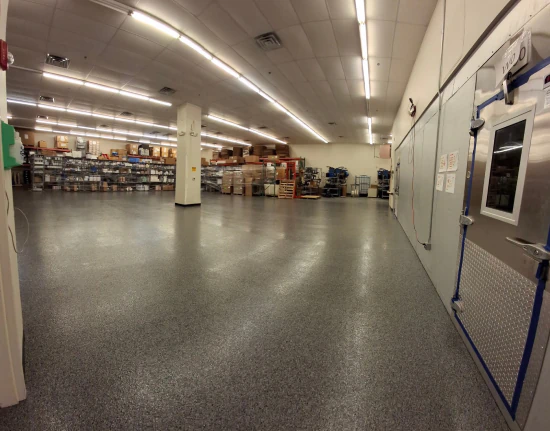
The commercial floors we coat around Blandon are not giant distribution centers. They are the stockroom behind a store, a contractor’s shop, a post frame building with a workbench along one wall, a back room with a walk in cooler and a few runs of shelving. Small spaces, but busy ones, and the owner almost always asks the same thing first: how long until we can use it again? The honest answer comes in stages, because foot traffic, carts and loaded racking each come back at a different point. Getting that order wrong is how a brand new floor gets marked in its first week.
What a loaded rack leg does to a young floor
A loaded shelving unit stands on four small feet. All the weight of the steel and everything on it comes down through those few square inches, which concentrates a lot of force on one spot of floor. A fully hardened coating takes that in stride. A coating that is still hardening does not.
Put a loaded rack back on too early and each foot presses into the surface. You get dents under the legs, and sometimes a ring around each one that shows forever after, even if the racking is later moved. The floor itself is fine. It just was not ready for that particular load yet.
This is the single most common way a commercial floor gets damaged after a good install, and it is entirely about timing. That is why we talk about return to service in detail before the job is booked, not on the last afternoon.
A shop has its own version of the same problem. A rolling tool chest full of sockets, a welder on small casters or a heavy bench on four steel feet all put their weight down through a tiny footprint, so they wait for the final stage along with the shelving.
Foot traffic first, wheels second, racking last. Most damage to a new commercial floor comes from reloading the shelves a day too soon.
The order the floor comes back
Jimmy quotes return to service honestly, as a sequence. First, people on foot, so staff can walk through and start setting things up. Second, wheeled traffic: carts, hand trucks and pallet jacks. Last, the loaded racking and any vehicles, once the system has fully hardened.
How long each stage takes depends on the system specified for your floor, so you get the real timeline for your building at the walkthrough, written into the plan. What you can count on is the order. A stockroom can usually be walking again well before it is restocking.
It helps to plan the move with that in mind. Empty shelving can go back early, then get loaded in the final stage. Stock that has to stay reachable can sit on the floor of a section that is already done. The Blandon warehouse flooring page walks through how the build and the phasing fit together, and the main warehouse page covers the system itself.
Heavier where the pallet jack runs
Not every part of a stockroom works equally hard. The lane from the back door to the shelving, the turn at the end of an aisle and the spot where the pallet jack always parks take far more wear than the corners under the racking.
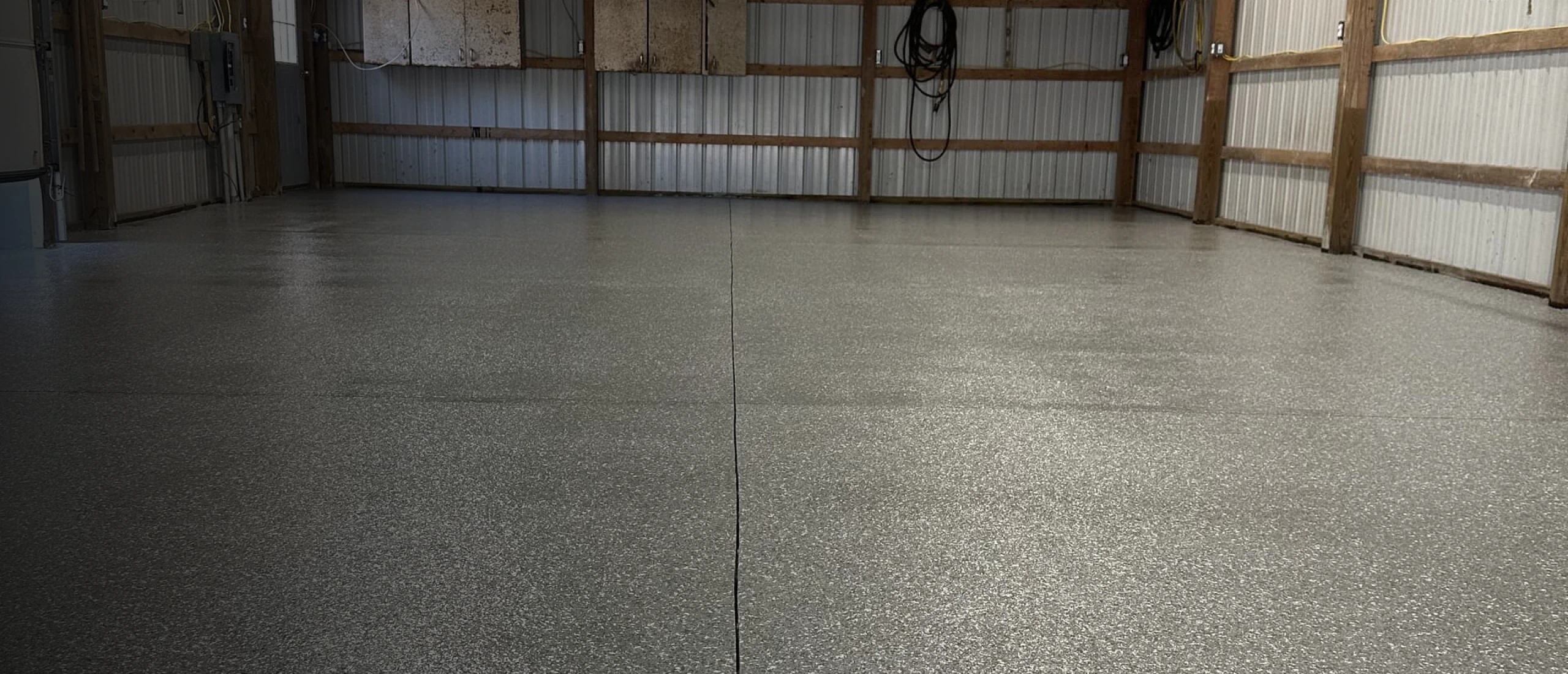
So those traffic lanes get a heavier build than the rest of the floor. You will not see the difference, since the same blend runs throughout, but it puts the extra material where the wheels are. Years later, when a lane starts to show wear, it can be abraded and recoated on its own instead of redoing the whole room.
If the space has forklifts as well as pallet jacks, or anything with hard wheels, tell us at the walkthrough. That changes the lane build, and it is far easier to plan for than to fix afterward.
Lines, cooler doors and dust on the stock
Walkways, bay edges and keep clear zones in front of doors and panels go in as part of the build, not painted on afterward where they wear off in the first season. They are laid out with you before anything is coated, so they match how the room is really used.
The walk in cooler threshold gets particular attention. It is where cold, damp air meets the warmer room, where carts bump over every few minutes, and where any coating has to be detailed carefully around the door frame.
And then there is the dust. Bare concrete sheds a fine gray powder constantly, and in a stockroom it settles on boxes, shelves and product. Owners often notice that more than anything once the floor is sealed: the stock stays clean. If chemicals, oils or cleaners get used on the floor, tell us what they are and the system gets specified for them.
Before the walkthrough
Sketch where the shelving stands and where the pallet jack runs.
List anything spilled or used on the floor, by name if you know it.
Note which days the doors absolutely have to be open, so phasing can work around them.
What owners ask before the racks come out
Does every rack have to move at once?
Usually not. We phase the work so one area is done while the business carries on in another, and weekend work on commercial jobs is a regular thing for us. One customer put it this way: “They worked around our busy business schedule so that we never had to close.” The phasing plan gets agreed with you before the start date.
How will we know the floor is ready for racking?
Jimmy tells you, in the plan, before the work starts, and the crew confirms it on site. It depends on the system and the conditions in the building, so it is never a guess off the phone. If in doubt, give it longer. Waiting an extra day costs you a day. Reloading early can mark the floor for good.
Is a commercial floor covered by the lifetime warranty?
No. Cobra’s true lifetime warranty is for residential interior floors. A commercial floor works under very different loads and traffic, and what applies to your building is set out clearly before you commit. That is part of the walkthrough conversation, along with the system, the lanes and the return to service order.
A stockroom on the 222 corridor can be coated without the business stopping, as long as the floor comes back in the right order. Other work we do nearby is on the Blandon service area page, and slip resistance at the shop entrance is covered on the anti slip page for Blandon.
Plan the floor around the business
Tell us the size of the space, what runs on it and which days you cannot close. Jimmy calls back within one business day and will come see the building before anything is planned.
Call (484) 942-3219 or message us here. OSHA certified, PA HIC 177204.
Book a walkthrough