
The first coat on a newer Amity Township garage
The developments set back off the 422 give us some of the most straightforward floors we do. A modern slab in decent condition is an easy job, and the best time to protect it.
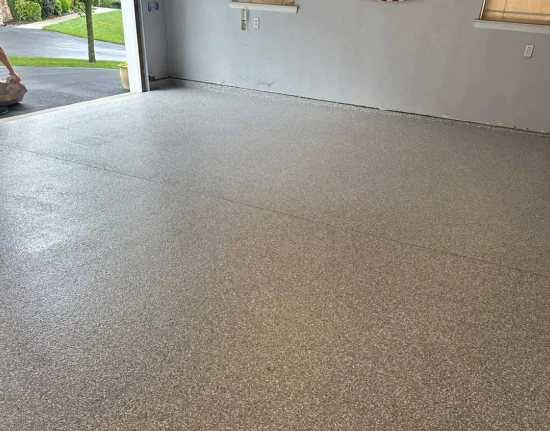
Turn off the 422 almost anywhere in Amity Township and you pass the houses that have gone up around Douglassville since the nineteen nineties. Most of them share the same garage: attached, room for two cars, poured flat to a modern standard and still sound. When those owners call us, winter salt is nearly always what pushed them, because they have watched the bare gray floor take a beating from it. For our crew these rank among the simplest jobs on the calendar: a short repair list, the usual system on top, and the space back in your hands after two working days. Simple still involves steps, so here is how a first coat on one of these garages goes.
A slab that has been bare since the house went up
In many of these homes the garage floor has never had anything on it. The house was built, the slab was left gray, and the cars have been driving on raw concrete ever since. That is good news for the job. There is often no failing paint or peeling kit coating to take off first, just concrete that needs opening up.
Being a younger pour helps as well, since a slab from these decades usually has some freeze protection mixed right into it, which buys time before the surface starts to pit.
Decent condition does not mean untouched. Most of these floors carry a few divots, a hairline crack or two, and wear where the tires sit. Those get repaired like any other slab. The difference is scale: a handful of small fixes, where an old river side outbuilding can need a day of repair work on its own.
What Jimmy still checks on a slab in good shape
Good condition does not let a floor skip the walkthrough, since every choice about the job is settled on that visit. Jimmy measures the garage, goes over the slab to see what state it is in, and tests for moisture if the space gives him a reason to. No part of the build is settled off a photo.
Then comes color, and this is where a newer garage surprises people. A blend that looks one way in the daylight coming through an open overhead door can look quite different under the ceiling fixture once the door is down, and an attached garage spends time both ways. That is why Jimmy brings actual sample pieces and sets them on your own concrete, so you pick under your own lighting instead of off a monitor. One review put it simply: “He fully explained the process to us and helped us pick out and match the color.”
Anything the walkthrough turns up gets passed on to you. A crack that proves to be more than surface deep is explained, along with the fix, while you still have time to decide. No hidden fees, no surprises. The Douglassville flake floor page covers the blends in more detail.
On a newer development garage, the normal job is two working days: gray concrete on the first morning, a sealed flake floor by the second evening.
How the two day build runs
Nothing about the process is special to newer houses; a basement under a hundred year old home gets the identical sequence. The only thing a good slab changes is how much repair sits in the middle of it.
Day one opens with a diamond grinder hooked to extraction, so the surface is opened up for the base coat to bite and the dust ends up in the vacuum rather than the house. Each divot and crack is then opened out, packed with filler and brought level with the concrete around it. After that the base coat goes down, flake is thrown by hand into the wet coat, and the chips that did not stick are scraped off once it sets. A polyaspartic topcoat closes the whole floor over.
Every product on the floor is American made, the crew runs OSHA certified equipment, and you get the warranty in writing when it is done. Cobra’s warranty on residential interior floors is a true lifetime one.
Reliability is the other half. The crew arrives when it said it would and leaves a finished floor on schedule. On a garage this size, that means two working days, and you know which two before we start.
Why the salt is the reason to do it now
Most people who call about a newer garage mention how it will look. The stronger case is the 422. From November through March, anything driven on it comes home carrying salt, and that salt drips off onto the garage floor. Left overnight on uncoated concrete, the salty water does more harm to a house slab around here than anything else it will ever face.
A newer slab has margin, but that margin is what you are spending every winter. The time to seal concrete is while it is still in decent condition, because that is when the job stays simple. Wait until the surface has started to pit and scale, and the repair side of the walkthrough grows.
Once the topcoat is on, the salt water has no way into the concrete. It sits on top until you squeegee it out the door, and the slab underneath never sees it. The finished floor happens to look far better than bare gray concrete too. Nobody minds that part, but the salt is the real reason to do it.
Both bays, the cars and the three day wait
A two car garage is one floor, and it gets coated in one go. It helps to plan where the cars will sit before the walkthrough rather than the night before.

Once the topcoat is down, the timing goes like this. Foot traffic is fine by that evening. Shelving and stored boxes return the following day. Cars are the exception, at around three days. A tire comes in off the road warm, and on a coating that is still hardening that heat and weight can leave a print, which is how an owner who parks early ends up marking a brand new floor.
The season makes little difference. We coat interior floors in every month; with the overhead door shut, an attached garage stays warm enough for the system to cure, and on a truly cold slab we add heat. Because outdoor jobs drop off the schedule in winter, dates are often easier to get then. More on the garage system is on the Douglassville garage floor page.
Before the walkthrough
Decide where the cars will sit for about three days.
Note any cracks or divots you already know about, and take a photo or two.
Look at the floor with the overhead door both open and shut, since that is how you will see the blend.
What development owners ask us
My garage floor looks fine. Is it worth coating now?
Looking fine is the best time. A slab in decent condition needs only a handful of repairs, so the job stays at two days. Every winter of salt on bare concrete spends some of the margin a newer slab has, and once pitting starts the repair work grows. Jimmy will tell you honestly at the walkthrough what shape yours is in and whether waiting costs you anything.
What has to come out of the second bay?
Everything sitting on the floor, because both bays are coated as one surface in a single job. Bins, tools and whatever is stacked along the walls go somewhere else for the install, and boxes and shelving can come back in the day after the topcoat. The cars stay out for about three days, so work out where they will park before the start date.
Will I be able to see where the divots were patched?
It is unlikely. Each patch is filled and worked down until it sits level with the slab before the base coat, and the scattered chips on top keep your eye from landing on any one spot. A solid gloss color would show every repair, which is part of why we steer garages toward flake, newer slab or not.
A newer garage off the 422 is about as simple as floor coating gets. The simplest version is the one done before the salt has had many winters at it. Other work we do in and around the township is on the Douglassville service area page.
Get the slab looked at while it is still good
Tell us the garage size and roughly what shape the floor is in. Jimmy returns the call within a business day and normally walks the garage that same week, samples in hand.
Call (484) 942-3219 or send us the details. American made product on every floor, PA HIC 177204.
Book a walkthrough